
SD-WAN for Healthcare: Sector-Specific Vendor Matching App
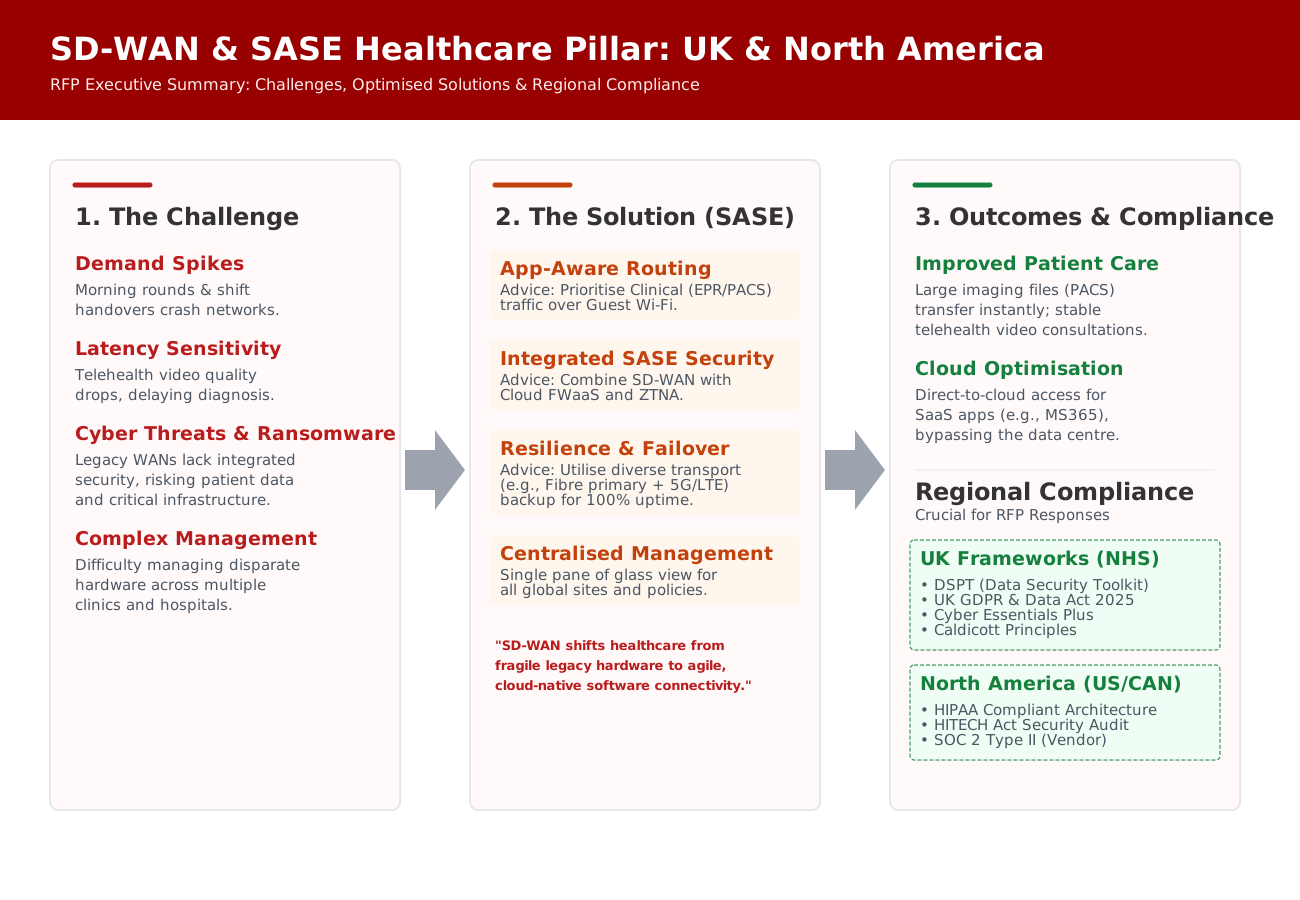
Legacy WAN architectures cannot support healthcare's demands for clinical application performance, multi-site connectivity and regulatory compliance, however SD-WAN and SASE solutions provide the answer through application-aware routing, centralised management and integrated security for NHS Data Security and Protection Toolkit (DSPT), UK GDPR and Caldicott Principle compliance.
Scope & transparency: Netify is not a network/security service provider and does not certify compliance. We translate common requirements (e.g., NHS DSPT, HIPAA, clinical safety expectations) into procurement questions and require suppliers to evidence their claims. Final compliance decisions remain with the buyer and their appointed advisors.
Healthcare Trust & Evidence
See how Netify curates Healthcare SD-WAN and SASE providers, how we maintain our RFI/RFP templates, and how we publish corrections and updates.
1 Healthcare Requirements
Instantly get capability statements from over 30+ vendors based on clinical requirements. Ideal for IT decision makers evaluating market solutions.
2 Complete SD-WAN RFP
Build a comprehensive Request For Proposal (RFP) tailored to complex clinical infrastructure and DSPT compliance requirements.
Start Healthcare RFP Process Create a healthcare-specific SASE RFP
"Scope & transparency: Netify is not a network/security service provider and does not certify compliance. We translate common requirements (e.g., NHS DSPT, HIPAA, clinical safety expectations) into procurement questions and require suppliers to evidence their claims. Final compliance decisions remain with the buyer and their appointed advisors."
Harry Yelland
Harry conducted in-depth research across technical and regulatory domains to develop this guide. He analysed healthcare-specific networking requirements, including framework-aligned questions for DSPT and CAF (where applicable), investigated real-world UK healthcare cyber incidents such as the Synnovis attack, and synthesised vendor-neutral SD-WAN and SASE explanations to support due diligence and reduce ambiguity. His approach combined sector reports, standards documentation, and peer-reviewed insights to improve evidence capture.
Robert Sturt
Robert validated all factual claims, legal references, technical explanations, and framework-aligned questions, supporting accuracy and alignment with current UK healthcare networking and cybersecurity expectations.
- National Audit Office Investigation WannaCry cyber attack and the NHS
- UK National Cyber Security Centre Cyber Assessment Framework
- SASE Cybersecurity for the Healthcare Sector Netify Insights
- Impact of cyberattacks on primary care Lancet Digital Health
- Data Use and Access Act 2025 health sector perspective
- SD-WAN vs SASE Palo Alto Networks
- How to Choose SD-WAN for Healthcare Netify Insights
- NHS Data Security and Protection Toolkit (where applicable)
- NHS DSPT CAF aligned guidance
- Synnovis cyber attack statement NHS England
Our Healthcare RFI and RFP templates are designed to obtain supplier transparency. For each relevant topic (e.g., security controls, governance, clinical safety expectations), suppliers must answer and attach supporting artefacts (policies, certifications, test summaries, data flow details, SLAs). Netify does not certify these claims; buyers use the evidence to complete due diligence. Supplier responses are supplier attestations and should be supported by documentation.
● Executive Summary
Legacy WAN architectures cannot support healthcare's demands for clinical application performance, multi-site connectivity and regulatory compliance, however SD-WAN and SASE solutions provide the answer through application-aware routing, centralised management and integrated security for NHS Data Security and Protection Toolkit (DSPT), UK GDPR and Caldicott Principle compliance.
● Impact on Patient Care
Healthcare organisations depend on network connectivity for every patient interaction, clinical decision and administrative process. When networks fail or perform poorly, clinicians cannot access patient records, diagnostic images experience delays, telehealth consultations freeze mid-session and critical alerts from connected medical devices fail to reach the appropriate staff - resulting in delayed treatment decisions, compromised patient safety and potential regulatory breaches.
● Operational Strain
Whilst traditional healthcare network architectures can often struggle with operational demands (especially when considering the complexity of modern digital health workflows), at the same time connectivity itself, such as MPLS circuits, are expensive to deploy across geographically dispersed sites and inflexible when services relocate or new facilities open - something that happens frequently as healthcare providers adapt to changing population needs and commissioning arrangements. On top of this, backhauling all traffic through central data centres can introduce latency that degrades real-time applications (such as Picture Archiving and Communication Systems and telehealth platforms), leading to single points of failure, as well as the needs for guest WiFi, medical IoT devices and remote working staff all competing for bandwidth, which can squeeze capacity for clinically critical systems during peak periods.
● SD-WAN & SASE Solution
However, with SD-WAN and SASE architectures, healthcare organisations can address these challenges through the likes of application-aware traffic management, supporting multiple connectivity types, which is also beneficial for resilience, and providing centrally managed security that scales across distributed sites and minimising the need for on-site expertise. For healthcare providers, SD-WAN and SASE can offer solutions for the majority of pain-points that traditional WAN causes, alongside supporting the sector's regulatory requirements.
How does the healthcare operating environment impact connectivity requirements?
Although there are often many common themes and demands across the healthcare sector, it's easy to forget that not all healthcare organisations' needs are the same - operating across different site types, each with distinct connectivity requirements and tolerance for failure. Understanding these operational differences is essential when evaluating SD-WAN and SASE solutions, as the consequences of network failure vary dramatically depending on location type and the clinical systems that depend on connectivity.
● GP Surgeries & Primary Care
GP surgeries and primary care sites depend on continuous connectivity for electronic patient records, e-prescribing and referral systems. Even though some clinical systems offer limited offline functionality for appointment notes, these capabilities have significant restrictions - clinicians cannot access patient history, medication records or test results without live connectivity.
Extended network outages can force practices to revert to paper-based processes, creating patient safety risks from incomplete information and administrative backlogs that take days to clear.
● Acute Hospitals
As to be expected with larger facilities, acute hospitals introduce considerably more complex performance requirements - electronic patient records remain critical, however these sites now run the likes of Picture Archiving and Communication Systems (PACS) requiring rapid transfer of diagnostic images (often several hundred megabytes per study), real-time patient monitoring systems transmitting continuous vital signs, and laboratory information systems coordinating thousands of test results daily.
And whilst the effect of some issues can sometimes be absorbed by hospitals for the betterment of patient experience (such as slightly delayed non-urgent results), other effects can be directly harmful. For example, slow PACS performance means radiologists cannot review diagnostic images promptly, potentially delaying time-critical diagnoses. Furthermore, more direct effects on hospitals can come from delayed critical alerts from patient monitoring systems failing to reach clinical staff in time - either compromising patient safety or requiring manual workarounds that consume nursing time.
● Community Healthcare
Unlike both primary care sites and acute hospitals, community healthcare facilities represent a dispersed operational model. District nursing teams, community mental health services and rehabilitation centres often operate from smaller sites with minimal IT support. Within these, network reliability is essential for mobile clinicians accessing records during home visits (often via 4G/5G), secure messaging between care teams and video consultations with patients who cannot travel.
When community site networks fail, the impact can cascade across patient pathways - discharge planning stalls, medication reviews are delayed and vulnerable patients miss essential monitoring.
Technical Performance Standards
Healthcare SD-WAN deployments must satisfy specific performance thresholds to support clinical workflows without compromising patient care delivery.
● High-Bandwidth Imaging
Standard 3D mammography files are often multiple gigabytes per examination, creating significant bandwidth demands for radiology departments. Legacy connections require far longer to transfer a single high resolution imaging file, introducing delays in diagnostic workflows where radiologists must compare current studies against previous examinations.
The Impact of Latency on Diagnostics:
- Diagnostic Accuracy: UK NHS trusts report that radiologists examining CT scans with thousands of individual slices require instant image progression to maintain diagnostic accuracy, with any buffering or lag introducing eye strain and potential diagnostic errors during multi-hour reading sessions.
- Burst Traffic Handling: Radiology departments with multiple consultants simultaneously accessing PACS during morning reporting rounds generate burst traffic reaching 2-3Gbps, requiring bandwidth aggregation across multiple circuits to prevent image rendering queues.
SD-WAN broadband links reduce this transfer time to a fraction of the time, enabling radiologists to access imaging studies without clinical workflow interruption during on-call emergency trauma assessments.
● Real-Time Clinical Comms
Real-time video consultations and VoIP communications require strict latency and jitter tolerances to maintain clinical communication quality. Industry standards state that latency should remain under 150ms and jitter under 30ms to prevent issues with voice or video buffering.
Forward Error Correction (FEC):
The Forward Error Correction (FEC) capabilities of SD-WAN enables the reconstruction of lost packets in real-time without retransmission delays, maintaining audio/video quality even when packet loss reaches 1-2% during peak usage periods.
- Patient Experience: UK primary care networks report that FEC capabilities typically eliminated the previous consultation interruptions that forced patients to repeat symptoms descriptions, that had otherwise resulted in extending appointment durations by up to 3-5 minutes each.
- Clinical Safety: Cardiology departments conducting remote patient monitoring via video consultations require clear audio to detect respiratory distress indicators including speaking difficulty and breathing patterns.
● EHR Latency & Efficiency
Healthcare IT departments report that legacy connections with 100-200ms latency create visible delays in screen transitions, forcing clinicians to pause between clicks to ensure previous actions completed. This accumulated lag reduces patient throughput and extends clinician working hours.
- Operational Impact: UK A&E departments reporting that Epic screen lag contributed to 10-15% increases in patient documentation completion times during winter pressures when departments operate above capacity.
- The SD-WAN Fix: With SD-WAN deployments, healthcare organisations were able to achieve consistent sub-50ms round-trip latency through path selection optimisation, ensuring instantaneous screen updates that match on-premises performance characteristics.
UK private hospital groups report that eliminating VDI lag improved clinician satisfaction scores whilst reducing the time required to complete patient documentation.
Strategic Overview & Technical Deep Dive
Select a topic to explore regulations (DUAA 2025), vendor scenarios, and procurement strategies.
Compliance & Security 2026: The Data (Use and Access) Act
Healthcare SD-WAN deployments must satisfy evolving UK and international regulatory requirements whilst maintaining patient data protection during clinical workflow optimisation.
Data (Use and Access) Act 2025 (DUAA)
The Data (Use and Access) Act 2025 (DUAA) introduces mandatory data auditing and access control requirements for healthcare organisations processing patient information. SD-WAN platforms support these compliance obligations through centralised logging and policy enforcement, enabling healthcare organisations to demonstrate which clinician accessed which patient record, when access occurred and which clinical applications processed protected health information.
AI-Assisted Diagnostics & Human-in-the-Loop
UK healthcare providers integrating AI-assisted diagnostic tools into radiology and triage workflows face specific human oversight requirements under the Data (Use and Access) Act 2025 (DUAA).
Network-induced delays displaying AI-generated diagnostic overlays on high-resolution CT scans create screen lag that impedes human intervention (required under DUAA Article 22A), potentially creating bottlenecks in critical care pathways. SD-WAN architectures resolve this by supporting AI-assisted radiology workflows with sub-50ms latency for simultaneous display of original DICOM imaging studies alongside AI-generated annotations.
Encryption & NHS DSPT
NHS Data Security and Protection Toolkit (DSPT) and HIPAA regulations mandate that encryption keys for patient data transmissions remain under healthcare organisational control rather than third-party transport providers. Healthcare SD-WAN deployments implement customer-managed encryption (CME) where healthcare organisations generate, store and rotate cryptographic keys independently of connectivity providers.
Vendor Application Scenarios
Healthcare organisations should select SD-WAN vendors based on specific clinical use cases rather than generic feature comparisons.
Use Case A: Home Radiologists (VMware VeloCloud)
VMware VeloCloud addresses the technical challenges of enabling radiologists to read high-resolution imaging studies from home broadband connections during on-call emergency trauma assessments.
Dynamic Multi-Path Optimisation (DMPO) continuously monitors available paths and steers individual packets across optimal routes based on real-time latency, jitter and loss measurements. UK radiology groups report that DMPO enables consultants to access PACS systems from residential internet connections without the rendering delays that plagued previous home-working implementations.
Use Case B: Clinic Consolidation (Fortinet)
Fortinet Secure SD-WAN addresses space and budget constraints in smaller GP surgery and community clinic facilities through ASIC-accelerated security processing that combines routing and firewall functions within single appliances. UK GP surgery networks deploying Fortinet report that consolidating previously separate routers and firewalls freed physical space in small server rooms whilst reducing appliance purchase costs by 30-40%.
Use Case C: Ambulances (Peplink)
Peplink SpeedFusion addresses the connectivity challenges of mobile healthcare delivery through packet bonding across multiple cellular carriers simultaneously. Ambulances equipped with dual-SIM configurations leverage SpeedFusion to aggregate bandwidth and eliminate dead zones, ensuring paramedics can transmit real-time ECG telemetry and video feeds to emergency department physicians during patient transport.
Business Case: Legacy Architecture vs. Healthcare SD-WAN
Building a business case for SD-WAN requires a direct comparison against legacy MPLS architectures. The following data highlights the operational and financial impact.
| Feature | Legacy Architecture | Healthcare SD-WAN | Impact on Care |
|---|---|---|---|
| Cost Model | High cost per Mbps restricting bandwidth. | Broadband aggregation enabling greater bandwidth. | NHS trusts report 40-60% WAN cost reduction. |
| Redundancy | Single carrier dependency; manual failover disrupts EHR. | Multi-path (Fibre, 5G) with sub-second failover. | Eliminates care disruption during circuit failures. |
| Deployment | 90-120 days for MPLS provisioning. | Zero-Touch Provisioning (days/hours). | Accelerates urgent care & vaccine centre openings. |
| Security | Perimeter-based (vulnerable to lateral movement). | Zero Trust (SASE) with micro-segmentation. | Isolates IoMT devices from ransomware. |
How does Netify help healthcare organisations?
Netify operates as a neutral SD-WAN and SASE marketplace that helps healthcare organisations navigate vendor selection without vendor bias - providing our intelligent RFP builder tool that guides your healthcare organisation through defining specific requirements, covering network topology, site types, compliance obligations, resilience expectations and operational constraints.
We support both large NHS organisations and mid-market healthcare providers, with RFP templates and guidance tailored to the full range of healthcare-specific requirements.
What sections should be included within your Healthcare SD-WAN and SASE RFP?
| Pillar | RFP Question Summary | Rationale and Regulatory Sources |
|---|---|---|
| Clinical Performance | Detail how the solution prioritises EHR, PACS, imaging, and telehealth traffic across MPLS and 5G. | Safety critical traffic requires low jitter and zero packet loss to maintain diagnostic integrity. NHS DCB0129 Standard HHS HICP Guidance |
| Protocol Support | Confirm support for DICOM, HL7, and FHIR protocols without issues relating to MTU or asymmetric routing. | Medical protocols behave differently than generic SaaS traffic and often fail under standard WAN policies. HSCC Cybersecurity Practices |
| UK Safety Standards | Map network and security policy changes to DCB0129 and DCB0160 clinical risk management standards. | Statutory obligations require healthcare organisations to manage clinical safety risks from network services. NHS Clinical Risk Management |
| Compliance Mapping | Provide a mapping for NHS DSPT (CAF aligned) and HIPAA technical safeguards (45 CFR 164.312). | Statutory compliance requires clear traceability between network controls and regional data laws. NHS DSPT Toolkit HIPAA 45 CFR 164.312 |
| IoMT Security | Describe the segmentation model for medical hardware that cannot support security agents or frequent patching. | Unmanaged clinical devices are primary breach vectors requiring network level isolation. FDA Medical Device Cybersecurity |
| Identity & Access | Explain ZTNA enforcement for clinicians and support for "break glass" emergency access. | Clinical workflows require rapid entry during emergencies without creating permanent security gaps. ICO Special Category Data |
| Threat Protection | Detail DNS security and SWG policies specifically tuned for healthcare vendors and clinical allowlists. | Generic security policies often disrupt essential clinical portals and telehealth sessions. HSCC Threat Alignment |
| Data Residency | Confirm ability to restrict traffic inspection and log residency to specific regions like the UK, US, or Canada. | Healthcare contracts often mandate strict data residency to comply with local privacy statutes. Canada PIPEDA / PHIPA |
Frequently Asked Questions
Common questions regarding healthcare network architecture, compliance, and clinical performance.